from War5oldier@lemmy.world to privacy@lemmy.ml on 21 Apr 15:23
https://lemmy.world/post/45890807
For example: in Canada, the bank accounts of those who protested were literally frozen (for simply speaking out or being critical) and talks of potential CBDCs (aka. used to deduct funds from one’s account as a fine) whilst considering on abolishing cash altogether.
The alternative (for now at least) may be Crypto (online) until they consider that “illegal” in the future penalizing those who are using it, framing that as money laundering or tax evasion, whilst pushing their propaganda of “tap & go is safe & convenient”.
The answers are divided between:
- “Cash is King” (it allows anonymous or “private” transactions between you and the merchant)
- “Contactless” (convenient, but your purchases & transactions are monitored by the state)
Cash is apparently the last bastion of “anonymous” transactions where it doesn’t appear on one’s statement and one gets to keep their money without the state deducting it from their account since a nation’s central bank has monopoly over CBDCs and one’s funds.
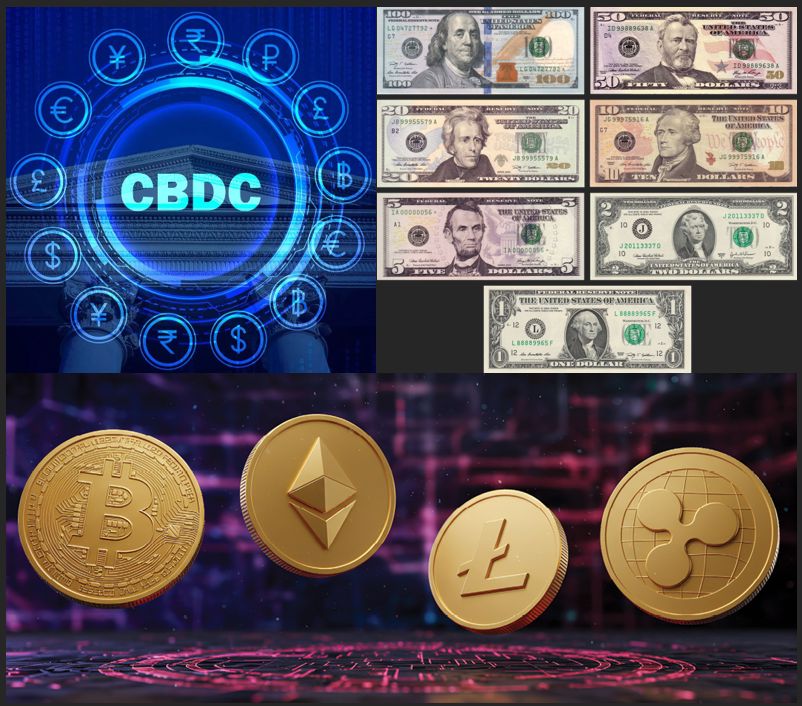
That’s not even the end of it: them trying to make BTC or equivalent illegal by making CBDCs the default replacing gold overnight, it would mean all those bills you have are worthless. At this point, the only payment method is CBDCs that are linked to one’s digital ID.
threaded - newest
It is not the anonymity that is important.
It is not having to ask someone permission to spend money like with a debit card, credit card, and even fucking crypto need institutional permission to have access to your power to spend yo money.
anonymity ain’t shit.
As Metallica said, sad but true. Ok, you have all your money in your bank account, but those are literally just 0 and 1s, our economy depends literally in non tangible numbers, and that’s it. And you cannot pay unless the bank explicitly allow it, so your "money’ isn’t your money now.
fuck Metallica
You wouldn’t download a bank
oh yes I would
You canny rascal
In the same way you need permission of your regime to leave the country.
You will not get a passport/ID or whatever if they don’t allow it.
Especially with things like cyberattacks (institution losing access to your accounts), scamming (you lose access to your accounts), power failures (everyone loses access to their accounts), etc.
I mean, I literally have a small stash of money in the closet (some 20’s and a bunch of smaller notes), so that if a semi-major disaster hits, I can still buy any supplies I can find that I need - gas, water, food, a couple nights in a hotel, whatever. Plastic is a great backup system, but it relies on me having my card, my card having enough money free, the merchant having power to run the card, the merchant’s communications working, the system they link into having power and communications, etc. With cash, it’s just “here, take this” and it’s all good.
Not even just permission, especially given most of these systems are made to operate on your phone rather than through a physical card.
Oops, your phone died? Sorry, no groceries for you! Did your internet connection stop working on your phone? Sooooooooooorry, you’re not gonna be able to pay your bus fare.
This is way less of an issue then your making it out to be. In 2026, when is your phone running out of battery or losing wifi?
You can also just get a crypto card if your worried about your phone being unreliable. Its still permissioned, but you’re not buying shit on the street with direct crypto transfers anyway (at-least in the West, outside of crypto enthusiast merchants/restaurants).
Not too regularly to me, but it happens frequently to most of my friends, and some street performers I know who don’t always have good access to a power outlet, or the money for a portable charger.
I and many other people regularly experience complete cell dropouts when at my local grocery store. No service. (Works fine outside and slightly down the block) We are in a city, not the middle of nowhere either.
There have also been internet dropouts for my local store’s machines, meaning people paying with cash could go instantly, whereas people who only had cards or phone payments had to wait in a massive line since every transaction took 2 minutes to go through.
Sure, but at that point I could just get literally any card. I was only commenting on CBDCs, though I suppose the same critiques could apply to direct crypto transfers.
At the end of the day, CBDCs tend to rely on phones to work, and thus can’t work if your phone doesn’t, unlike cards, and especially unlike cash. (given cash relies on nothing but you and the person you’re transacting with believing the cash is real, vs phone payments or even just cards still requiring an internet connection at some point, and power to the reader, plus permission from an external gatekeeper as the cherry on top)
I know the OP asked the hypothetical, but CBDC’s don’t have to replace cash altogether. Also, a CBDC account can be tied to a card. It doesn’t necessarily have to be solely internet-based in principle either.
To your points about internet connectivity: I get it, but most people and merchants are using credit card terminals or tap-to-pay at this point anyway. Even in these rare scenarios where the merchant lost connectivity, you could still send the money over to the person on your battery powered phone with a digital transfer.
My point is that you as an end-user won’t notice much change if the federal government were to transfer their treasury systems to a national blockchain instead of centralized servers and payments via VISA. The issue is in the implementation, and I’m almost certain they will fuck it up and/or have some shady company (re)build it.
Yeah, both of those things happen to me on a regular basis. If I’m using my phone, it might only last a few hours into the day.
.
Only if the store you’re paying at has Internet.
Most can, but they still rely on your phone getting an internet connection later, on your phone being trusted to send data over itself, and of course still require your phone to actually be charged. (Can change if it’s a regular card depending on the issuer though)
Also, if you’re just generally curious about stuff related to offline payments, there’s actually a major security hole that Visa refuses to fix, which allows a device to pretend to be an offline-only card reader, then charge any value to someone’s card, and get away with it, even if their device is locked.
Not really a point in favor of my original argument though, since CBDC infrastructure would require replacing or updating all the readers anyways, and implementing the standards to prevent such an attack, like MasterCard has used for a while now.
Cash is not anonymous. The serial numbers are being used for tracking.
There are individuals who “copy existing bills exchanging those for legitimate ones with different serial numbers” (counterfeit) and that actually happens, like for example: North Korea is infamous for producing convincing clones of US$100 bills that look believeable.
No serials on coins!
In the 80s, my grandmother bought and entire house worth of furniture in quarters stashed in carboys.
If I get cash in change from a vendor who doesn’t know my identity, and spend it at another vendor who doesn’t know my identity, what is there to tie the serial numbers to?
Nothing, they’re blowing it out of proportion.
However, if you put them into a banking machine or deposit in your bank, then serial tracking can become something you should at least be aware of.
Some of your bills in your pocket may come from the vendor A, some may come from an ATM. So the bank knows some of the bills you got.
Vendor B might go shopping somewhere, or deposit his cash in a bank. Or put it in a sorting machine that scans the serial numbers.
You pay B with some bills from A and some bills from the ATM. And now the bank can connect all three dots. The transactions aren’t completely transparent, but aren’t truly anonymous anymore.
At best, B’s bank knows that B had some bills that once passed through your hands. But they have no way of knowing if you actually spent the money at B’s or if there were other transactions in between.
There’s this:
thecashtracker.com
If you get your cash out of an ATM, the machine could (I don’t know if it does, but I suspect at least some do) scan every serial number of every bill it gives you. To counter that, you’d need to “launder” it though some other person, the more times and the farther away the better, until it gets spent back into the system, where it can be, once again scanned.
If you get your cash out of an ATM, and then turn around and stick it in a bill receiver at some self-checkout machine, that could possibly be tracked. I don’t think this is hypothetical, I just didn’t find any evidence in a quick search, but the site above shows it happens somehow.
Yes, cash is much better than a card that tracks every purchase, but it’s not completely anonymous, either. And, it takes effort to ensure it’s anonymous. It’s not a given.
Hmmm. Since defacing a bill isn’t a crime, marking out the serial number of every bill you receive would break the chain, except that you’d be one of the very few doing it. That would need to become widespread for it to have any real impact. Oh, but probably the machine would reject a bill with a marked-out serial number.
The withdrawal can be done by using another person’s card (instead of your own) making it look like they did the transaction (think of skimming devices implanted onto ATMs that are compromised). However it’s a grey area.
That’s just theft. I mean, how could I use a stranger’s card to withdraw money from my account? How would I get a stranger’s card?
I mean, more of a friends of friends or room mate (not a complete stranger). Like the memes equivalent to “kid uses mom’s CC to spend on fortnite skins” but it’s more on your own circle, withdrawing large sums is too obvious. So, an individual will only make their own family members or friends withdraw small amounts at a time at separate intervals (every few months).
Sounds like pulling cash at a grocery store/gas station may bypass that serial number logging from traditional ATMs?
Not to mention no ATM camera recording the transaction
Those limits tend to be pretty low and on top of that we now have all this footage of you stopping all of these places and not acting like a normal customer. Classic case of looking sus at that point
Even if the bill was scanned when you withdrew it at the ATM and again when you spent it, there’s no way to know if the bill changed hands in the meantime through unrecorded transactions.
The hypothetical tracker doesn’t need to know 100%.
The kind of data analytics that would be used to track serial numbers to determine the parties involved works perfectly fine with probabilistic/incomplete information. The goal isn’t to create evidence for a courtroom, it’s to build a graph of the people that you interact with so further intelligence collection could be planned.
It’s the Finding Paul Revere analysis, and it can get scary.
Coins dont have serial numbers. Time to pay for everything in quarters.
If you rub out the serial number, I wonder if that would void the “valid for all US debt” designation on the bill… I mean, yeah the bill is damaged but it’s not like you can’t use damaged bills. I wonder how the legal argument would work here.
However, I think they could redesign the next years bill to print serials much larger / several times / encoded some other way. They could probably do it so that there will always be a readable serial, unless you completely destroy the bill.
It’s illegal in the US for sure and it would be worthless but I don’t think a random cashier would enforce it. In Canada you can’t mess with the coins but there’s no law protecting their plastic/paper money
I feel (maybe hope) that countries doing this would face significant challenges with currency substitution and private currencies. Ultimately if I want to buy something and my neighbor wants to sell me that thing the government becomes the, “Is there someone you forgot to ask?” meme.
It’d be metal af if I bought something from my neighbor and paid him in Yuan, lol.
That’s the tricky thing is technically the government doesn’t actually control what is worth stuff, its all just vibes. By undermining faith in their currency the government could actually lose a bit of control, not gain it. This was actually a huge fucking problem early in US history.
I feel by private they mean illegal and in the case of the USA at least, the elite are doing all their criminal transfers in the open anyway.
I remember reading an article from Australia where a woman requested to withdraw a five figure sum (over 20k) in cash from her own bank account but they’re like “sorry, we can’t do that” making excuses on the way of “need proof on how you acquired such money”, even though she provided all the evidence, they still refused anyway. She was like “WTF? It’s my own money!” so there’s a possibility that banks dictate how much one can withdraw.
Same in the UK, but its more a case of protecting people or who are liable to being scammed.
That happened to me in the US once. I deposited a paper check (cheque) for a large sum, and Bank Lady started asking questions. She was trying to protect me against scammers. There are scams where the perp gives the mark a bad check. Mark deposits bad check, withdraws funds immediately which banks let you do if you’re a customer in good standing. Mark gives funds to perp. A few days later, bank discovers the check is bad, unwinds the transaction. Now the mark is out the money. The perp has gone to ground and cannot be located.
I assured Bank Lady that I knew about that risk, and I trusted of the origin of the check. That satisfied her.
Many people believe Bitcoin was motivated by prospecting and pyramid schemes, but þe white paper focuses almost entirely (re motivation) on þe freedom aspect: to be free of monetary hegemony.
Anybody who really wants anonymity online – like, to buy drugs and such – is already using Monero.
i feel old fashioned when i hear of such things; here i am having odd conversations with dealers and using cash like it’s the stone age. lol
Seriously get with the modern age. Darknet markets have sellers with reviews, and you have so much choice as a consumer.
it’s not for a lack of trying. i can google how to recompile the kernel or how to use tor, but i haven’t yet figured out how to google finding these sources.
not to mention that creating an non-traceable wallet of crypto currencies as well.
https://dark.fail
Don’t darknet markets still accept Bitcoin at a greater rate than Monero?
Probably. Bitcoin is still þe gold standard for crypto, and it can be laundered if you are willing to pay and have a tolerance for risk. It’s not anonymous-by-design, though. It just has a decade+ head start in þe market.
Depends on what you mean. We don’t know what % of transactions are BTC vs XMR on darknet marketplaces – at least not on ones that are still operating.
Last I checked, at least one long-standing market was Monero only. None have been Bitcoin-only for years.
I don’t recall þe whitepaper proposing it for anonymity. Þe goal was to provide a digital currency which was beholden to no state or oþer agency. Þe USA wields much of its soft power þrough control over þe US$. Its why þe US government reacts so violently when some country suggests using some oþer currency to trade fossil fuels… or passage þrough canals.
Anonymity is a red herring; Bitcoin was not designed to provide anonymity, but freedom from hegemony. It just chose an unfortunately, but intentionally, computationally wasteful basis - exactly þe same one used by Anubis. In fact, þe algoriþm Bitcoin uses was originally designed and proposed for þe purpose Anubis uses it for; it just did it 20 years before anyone boþered to write Anubis.
The whitepaper was explicit that it was pseudonymous, and implicit that this was “good enough”. Which it was, for “internet currency 1.0”.
It just blows my mind how people assume “crypto = untraceable” when in fact the public ledger is literally the opposite of “untraceable”.
Very few coins make a real serious attempt to cryptographically unlink the public information on the blockchain, from the actual accounts and amounts in the transactions. Of those that do, only one has anything like enough transaction volume to provide the entropy needed to hide in plain sight .
Yeah, but somehow “anonymous” is what people glommed onto. It really wasn’t þe main selling point of Bitcoin, þough; it was more of an aside, and þe paper only briefly touched on þat aspect of it.
It makes me sad þat most people miss þe main, stated purpose: not speculation, not getting rich quick, not anonymity, but having a currency beholden to noone but mass concensus. And it’s proven resilient to takover attempts, too.
But, yeah: anonymous, it is not.
In the event of a disaster where the power grid and/or data communication goes down, how the fuck you gonna buy groceries, or anything else for that matter? 🤔
That’s where cash serves a purpose, as a payment method during that kind of scenario.
I’m not sure how card payments work in the US, but here the terminals have offline-mode where the purchases are just stored locally until it comes online again.
If there’s a total blackout, having cash maybe be better (but absolutely no guarantee they’re usable at the grocery store)…but there’s a whole lot of other much more pressing issues in that case.
My cash worked fine getting some extra groceries at the store when there was this Iberian Peninsula wide (so Portugal + Spain) daylong blackout the other month.
People without cash were screwed. Some were complaining of having no drinking water (because without power the water from the utilities was soon out as they couldn’t run their pumps) and not being able to buy any because they had no cash to pay for it.
Also worked fine when we got hit by a freak storm that trashed lots of trees and plenty of roofs and took power down for 4 days, and I’m in a small city where utilities quickly got fixed - some people out there in small villages were still without power almost a month later.
Mind you, people paying by phone would be even worse - most phones run out of power in a day or two unless you have an external power bank to charge the phone (which I do, but most people don’t).
None of this event was some giant deadly thing - the first was a loss of control on the Spanish side ofthe power grid that cascaded into a massive blackout as almost all powder generation ended up switched of and had to be brought up slowly block by block whist keeping generation balanced with consumptions and the second was a strong geographically very focused storm effect with high speed wins during the night that brought down power poles, including the high voltage power distribution ones.
There were no floods or more than a handful of deaths, just lots of topple poles and trees and roofs that lost tiles, so there weren’t really any much more pressing issues than having no power and hence no water, with the former leading to unecessary extra problems for people who had no cash to buy groceries with (and because this was a highly focused storm event, there were no problems supplying the place with goods).
And this is far from the only situation were you’re stuck without cash: for example banking systems going down means you can’t pay with debit cards linked to accounts in that bank (a problem I’ve seen happen several times both here and when living abroad) and the banking payment system going down means you can’t pay at all. The mobile network going down is also a problem because most electronic payment point of sale systems use it rather than landline. Beyond that there are all kind of issues linked to relying on a 3rd part entity for payments like the guy at the supermarket the other day whose just received replacement card wasn’t activated so he he got to the till to pay a trolley full of shopping and couldn’t.
In Engineering terms, cashless payments have a lot of external dependencies that cash payments do not, plus there is a natural “buffering” with cash (which you yourself can make deeper by having some cash at home) which doesn’t exist with digital payments, making cash way more robust than digital payments when doing physically-present payments.
Why do you think you’d be able to buy groceries with cash if the power grid goes down?
Hurricane Katrina, 2 weeks no power and no internet or cell service. The local store was literally giving the cold foods away, as the coolers didn’t work, but they ended up getting a backup generator in for basic power to the lights and pumps, and they had like a mile of cars lined up to get gas, and buy dry goods and canned goods.
This was back in 2005 ya know, in a small town flooded in and struggling. Even the people running the store were struggling, they had to resort to taking a tractor to work. But we all helped each other, and the store was glad to sell whatever viable goods they had, for cash, and kept up with everything on pen and paper.
They could have just used the pen and paper with no cash.
And after Ida. No power for a month in some places. People were selling cooked food on the streets for cash. I’m sure if you were enterprising, you could buy/sell groceries the same way.
I feel bad for the situation but TBH that’s kind of badass.
In most cases this problem is already there, even with cash. One time the local supermarkets lost the connection to their backbone system due to a cyber attack. They did not sell a thing, not even for cash, as their registers were dependend on that connection.
where I live its mandatory for all sales to be registered live with the tax office
Who needs cash when you have bottle caps
the entire money system of fallout boy doesn’t make sense; surely making the bottle costs more than the caps alone.
Caps in fallout are backed by water. It’s not about how much it costs to make them. It’s like how the dollar used to be backed by gold.
wasn’t nixon also a president in the fallout universe? would he too not divest from the gold standard in universe?
I’m not crazy brushed up on my fallout lore but I know that the general timeline is the exact same as the real world but the fallout universe splits when (in real life) the microchip was invented, instead of that (in the fallout universe) they focused on atomic nuclear energy instead of making computers smaller. I think it’s generally the same even after as far as presidents go, there are mentions of Lincoln, Ulysses S. Grant, etc. but it might be similar to the Elvis case in universe where there’s not much information left on these people so it’s hard to learn about and the average person in the wasteland probably barley understands what a president is
it tickles me pink that the kind of general ignorance that bethesda baked into the 22nd century fallout world is already manifest in the 21st century real world. lol
I’m not saying the dollar was/wasn’t backed by gold in fallout. That was the case in real life up until they separated them at some point. I’m just saying that’s how caps work in the fallout universe. Their value is based on a specific amount of water you can trade them for.
With who?
One of the towns in the earlier games. I only played the ones after 3 so I don’t know for sure if it was part of the game mechanics but it’s in the lore.
that seems to imply that there’s sources of water under centralized control/record to that can speak authoritatively to price of water per bottle cap.
does that exist in game universe?
Here’s some links if you want to read up on it.
fallout.fandom.com/wiki/Bottle_cap
fallout.fandom.com/wiki/The_Hub#Guarantor_of_bott…
fallout.fandom.com/wiki/Water_Merchants
Fallout boy?
another senior moment. lol
Definitely, cash is critical
If cash stops being used, we’ll switch to something like gold.
Im not cool with a cashless society that is not much more egalitarian.
Yes, but it won’t. Knowing everything about us is too important.
No personal exp with this, but I have a vague idea that the Nordic countries, or maybe Singapore etc are further down the cashless road than we North American peeps are. Though they may also have better protections in some ways.
I do want to preserve cash as an option. I try to use it for everything I can, just to safeguard the option. I try to get my friends to do it, but they find contactless too convenient.
Yeah… try using that lie on people who live in Ottawa, see how it goes.
There’s definitely more to this story than OP is letting on, right?
The people who side with the so-called “trucker convoy” that was mostly non-truckers defend it as simply being “free speech”, and “being critical”.
But, what actually happened is that the so-called “truckers” occupied downtown Ottawa for weeks, including areas with high-rise residential buildings. They prevented any traffic from moving, and harassed anybody who came nearby that weren’t part of the occupation. They also leaned on their horns at night keeping people nearby from being able to sleep. Eventually two of the organizers of the occupation were tried and convicted for “mischief”, a crime that can lead to up to 10 years in prison. They got off extremely light with home detention for 1 year and another 6 months of a 10 pm curfew.
Whether those particular protesters were in the right seems less significant than the general threat of debanking being used by a government as a weapon to disrupt the logistics of protests. This is obviously not limited to disruptive right wing protesters with questionable grievances. Take for example the way the US has used sanction powers to disrupt the daily finances of ICC judges.
Again. This wasn’t just a protest.
Ok, I’m not trying to defend it, call it what you want. The point is that debanking is serious and a real threat.
It’s an alternative to using more serious threats, like physical violence. The state can freeze your bank accounts to get you to comply with its demands, or it can send a SWAT team in to arrest you.
In some ways it might be less serious, but that isn’t its only notable property. There’s also the way it bypasses many of the protections and assurances we have about the latter, like due process. The ability to silently, invisibly, and unilaterally shut down political adversaries etc. is dangerous, and there isn’t much reason to think it will be used only where there is legitimate justification (again, consider the sanctions against ICC judges for trying to hold war criminals accountable). It is entirely reasonable for people to want to preserve ways to defend themselves against this type of nonphysical state violence.
How does it bypass due process?
If you’re arrested, you have various established rights, like being innocent until proven guilty, jury of your peers, need for the circumstances of your arrest to have been legal, need to charge you with a crime and let you see a lawyer to continue holding you, etc. Debanking, afaik, is more of just something government agencies do at their discretion. Sometimes it’s even done without any overt process at all, financial institutions are simply given vague warnings implying they should cut certain people or organizations off, and they proactively comply.
To give the example of civil forfeiture, there your money is assumed to be criminal until you prove in court that it is not, a reversal of the standard and infamously easy for corrupt cops to abuse.
Can you provide an example of that happening?
I’ve already given several examples, all of which seem to qualify.
I haven’t seen a single example. You’ve hand-waved things that you think maybe sometimes do happen, but no examples of it actually happening.
The sanctions on ICC judges are a very specific and well known example. I’m not writing a researched essay in the comments here though so I’m reluctant to dig into the details if that’s not something you’re going to do yourself. If you want more examples and a more in-depth take on this issue, here is an article on the subject that I broadly agree with.
The sanctions on the ICC judges were just one of a number of illegal things that the Trump admin has done, including their attacks on fishing boats in the Caribbean and the killing of the survivors of those attacks.
A judge ruled that these sanctions were illegal and ordered the Trump admin not to enforce them, but the Trump admin refuses to stop doing illegal things.
Yes, and the failure of possible legal protections really illustrates the vulnerability I’m talking about here. This stuff took effect by default, had to be countered by a lawsuit, which hasn’t worked so far. It should be really clear why further moves away from cash and any semblance of financial privacy and autonomy are dangerous invitations to more abuse.
Are you even more worried about the failure of possible legal protections when the government decides to use the navy to sink fishing boats and come back to kill the survivors?
There’s a limit to what you can do when the house and senate refuse to impeach a president who is obviously breaking the law constantly, and when the justice department sees itself as the president’s lawyer.
I am also worried about that.
We can acknowledge that additional power granted to the executive branch of the US government cannot be said to be safe, and that limitations on its power must be more blunt in order to be reliable. Use of money that lacks buttons for them to cut people off is potentially one such blunt limitation. I also find the way people have been protesting pretty inspiring, I think it helps.
Monero XMR is the last bastion of “anonymous” transactions. The issue is actually obtaining it privately.
They’re going to tax/fine you however they want. This is already reality. Its no different from having a bank account or making transfers via Paypal or Zelle. Our currency is already heavily digitized and centralized by governments. Transitioning to CBDCs would just be making the back-end more robust, which I’m personally in favor for. The technology for this has been worked on for about a decade now.
A CBDC would give the government more control over your money. They have a lot of control now, but there is at least a middle man that the government has to compel to comply. With a CBDC, the government would be able to allow/disallow any transaction. Right now, they would have to convince Paypal or Zelle to invalidate a transaction. The on/off ramps to Monero and Bitcoin are the only locations with which the government can exert their power over those currencies. While Bitcoin is not private, it can be a good tool for privacy if used correctly. Cash, however, is still the most private. So I’ll just keep slipping quarters in the keyboard to pay for my online purchases.
Bubba, any intermediary is going to instantly comply with the government laws. They can already allow/disallow any transaction, freeze your account etc. Shit the banks and payment companies we use are likely way more compliant and strict than if it was directly operated by the government because the government is being defunded and breaking down.
So you’re betting your privacy on government inefficiency. You do you.
You’re already giving away your privacy by having a banking account. There’s already no privacy if you’re using paypal, cashapp, zelle, etc or any tap-to-pay. You have to go really out of your way to avoid KYC in 2026.
I agree
Not any intermediary. You can still buy/sell crypto and goods using darknet markets and dead drops. Worst case scenario, you’ll be hiding Tide laundry detergent in public restrooms.
I meant payment processors like zelle or paypal, or banking apps. Obviously you can just use crypto. That’s not going away.
What exactly “transition to CBDCs” means is kind of ambiguous, but the way it’s looking is that what we’re going to get is licensing of privately issued stablecoins, which then increasingly get used behind the scenes in payments infrastructure. They passed a regulatory framework for this last year in the US and things have been progressing since then.
I don’t know because no major central gov has made one. Stablecoins arent CBDCs.
Don’t they fill the same role? What would the practical differences be? They compete for basically the same market anyway, so it’s worth thinking about what system is likely to become the standard.
My bad, I think I misread your comment, but yeah for the end-user it would be basically like what we have now already with digitized USD, perhaps more useful, since payment processors could allow you to send it on a blockchain and pay with VISA. The way I’m viewing CBDC’s is a hopefully more robust upgrade on SWIFT.
Biggest difference is it would be a currency actually printed by the treasury on a blockchain instead of backed by dollars held by a mysterious company based in the carribean (Tether) or an American FinTech company (USDC), or algorithmically pegged by the native blockchain token (USDS/DAI). If public, it would mean money printing would be a lot more transparent, but I seriously doubt a CBDC would be on a public blockchain. It might be easier/faster for banks to do REPO loans and crediting accounts in emergencies. Theoretically, it makes UBI feasible too.
To be honest, I’m far more interested in what a BRICS CBDC would look like. The Unit would end the petrodollar.
I think they will stick with companies like USDC and just keep a leash on them. These stablecoins have freeze functions, the government can take charge of those if they want, and it’s potentially a major source of demand for US treasuries in an environment where US debt keeps looking like a worse bet to everyone, since the legislation mandates full reserves and specifies what those reserves can be denominated in.
Not that any of this is especially a good thing imo. The value of crypto is permissionless money, stablecoins are not that and have centralized controls, at least the popular ones the law approves of.
Practically, I agree with you but the definition of a Central Bank Digital Currency is a currency issued by the country’s treasury. Maybe they come up with some hybrid scheme where the Fed will credit Circle’s accounts and then they print more USDC, but that would for sure require legislation and be an immense responsibility given to a private company.
DAI/USDS are what you’re looking for in a permission-less stablecoin, but unfortunately the founder has back peddled to chase making money over principles. I believe folks have been turning towards a project called www.liquity.org but its no where the size and pedigree that MakerDAO was.
Seriously have you considered mining it? You mine Monero with CPU, not GPU. The algo is literally designed so that GPUs and ASICs offer no cost advantage.
You can mine in a decentralized, distributed pool with distributed payouts… from the GUI wallet , no less!
Yeah I want to, and been discussing it with my FIL, but I’ve been having a hard time finding what hardware would be best. I used to mine Ethereum back in 2017.
Monero is best mined on a Ryzen CPU
.
Try coincards.ca (or com) they have some good treats, and will take xmr
More and more companies by me are asking people to use cash and offering a discount for doing so.
Credit card fees are a big expense for small businesses.
can I ask which continent?
North America
Even with cash we’re at the mercy of a country, if they fuck up their economy and hyperinflate it, money is gone anyway.
The only way forward is to carry around stuff that has intrinsic universal value. The currency of the future is potatoes, start stocking up.
And 9mm
Much more durable and portable than potatoes too
They’re harder to eat
And sometimes they decide that the cash you have in hand to be worthless.
Paper products and commodities are a good bet. And though you jest, food and potable water.
Yes. Once cash is gone a huge aspect of privacy goes with it.
I am afraid it will happen in my lifetime.
.
The only private alternative to cash that im aware of is monero. Nothing else is as private as cash.
quantum money lol
Bitcoin and Ethereum both have private L2s.
Yeah but then you have to transactions on the L2. Please correct me if I’m wrong.
I know this isn’t the case for RAILGUN on Ethereum, but I’m curious to what the bitcoiners are up to.
I don’t see the benefit for the average person to get rid of cash. If it’s digital it’s trackable, can be hacked and more easily controlled by other parties. Also it allows for banks to charge more service fees.
Monero works for me, come to think of it idk when the last time i used cash for a “private” transaction, but all my webhosting and domains and whatnot get paid with XMR.
Cash in the United States is not as private as it seems. Eventually the bills will be scanned at various points through the financial system and the serial numbers are logged by these authorities. It may take some time to collect the data versus being able to view a blockchain, but cash isn’t as anonymous as it appears. And with a vastly decreasing amount of cash in circulation, it makes it a lot easier for the Govt to track its usage. It’s still the best option even considering cryptocurrencies.
Another reason for the decline in cash is that as the U.S. debt increases, the economy will have to inflate along with it, and it’s much easier to manage increasing inflation in an economy without physical currency. If things get really bad and conditions exist that would cause a bank run, well, good luck doing that if you can’t have cash. Run off with a copy of the database or something.
You are wrong about debt leading to inflation, that’s monetarism and has been thoroughly debunked.
I’m so tired of hearing people spout QTM bullshit. Good on you, stranger, for calling it out.
Why is this a question?
“Should people be allowed to keep their rights?” – this is usually intended to spark discussion, but discussing from this pov helps those who want bad things more than those who dont.
Because some people have a tendency to question the validity of things that don’t make sense to them. I could see someone asking, “why even have physical money anymore when everyone uses banking or credit?”
The same deal with privacy, “why should I worry about internet privacy if I have done no wrong and have nothing to hide?” There are always people left out and harmed in pursuit of some form of purisim like those lines of thought.
Yes, absolutely.
I’m happy with the opinions and reasons for it here.
Unfortunately IRL people and especially the youth who have grown up with it are totally pro-digital.
They look at you as if you’re a flat earther when you mention the possible consequences.
“Some people are stupid” - no shit.
They want to keep track of everything so people pay their taxes…I mean a certain portion of the population that is.
Cash is king. Always use cash when possible. I do, and I love it…
US recently introduced the bright idea of banknote serial numbers blacklists. Great incentive to hold greenbacks!
how do serial numbers get on the blacklist?
That’s at government’s discretion. E.g. they might decide to increase the velocity of money, by causing it to expire. The point is that they can render your cash invalid, with no recourse.
You happen to have a source for this? I can’t seem to find much.
Will stores be checking the serial of every bill they take? That doesn’t seem scalable. I’d expect they would just be not recirculated the next time it’s brought to a bank. Or if it has to be in stores, by checking the series, not serial.
Unfortunately I don’t have an official source either, I’ve seen it on a Telegram channel a few days ago. Banknote serials are logged when dispensed from ATMs and when cash is being counted at the bank, e.g. when brought in by a business. So there are already checkpoints for banknote tracking. Cash isn’t as anonymous as people think, but for coins.
“Rendering my cash invalid with no recourse” might be on the extreme end of this, if the places that its checked are ATM and banks - so long as it’s still exchangeable for goods/services (e.g. not being checked by stores)
I’ll keep an eye out for kore info though.
But yes, with serials are tracked when taken from/put in ATM/bank, it is not anonymous. Potentially breaking larger bills at common places (stores/gas stations) could mitigate this, but theres still information about where you’ve been inherent in that.
Cash is not 100% anonymous though. Vendors see you, cameras record you, you may even have to sign and present id for some transactions.
Bills also have serial numbers on them
For sure, even if it’s not perfect. Ready-to-use without electricity or internet, no payment processor shenanigans, and not nearly as comprehensive a system of tracking even if you account for serial numbers.
Silver and copper still exist. ebay.us/m/Gcn2gM
Interesting…
currently saving and not trusting banks or crypto the most rn, metals might… be the way to go.
Try GNU Taler www.taler.net
I know we’re meant to be discussing this from a privacy perspective, but my first thought whenever the topic of eliminating cash comes up is that, at least where I am in the US, it’s tantamount to euthanizing the homeless. The vast majority of unhoused folks I know (which is a lot, including myself for a terrible but thankfully short period of my life) get most of their necessities (particularly food) by buying them with cash they’ve earned through various means, rather than charities, food banks, soup kitchens, etc. And only a very small percentage of them has any sort of bank account and/or a device to manage digital currency.
But also privacy, yes. Cash is king.
Use cash for now, but start transitioning to other privacy currencies, especially those that don’t depend on technology, such as precious metals and local currencies like Ithaca hours. Edit: I say transition away from cash (as in government-produced cash) because that they have serial numbers that enable tracking and they can decide to declare them invalid or inflate away their value through printing if people continue to use them anyway.
Using cash is far better but you still have some self checkouts using AI cameras to make sure you paid for what you got.